Hire the Best FDEs
Look for judgment, a record of getting useful work done, and curiosity about the business. Have a real conversation about the decisions someone has made. Give capable people meaningful work, autonomy, development and fair pay.
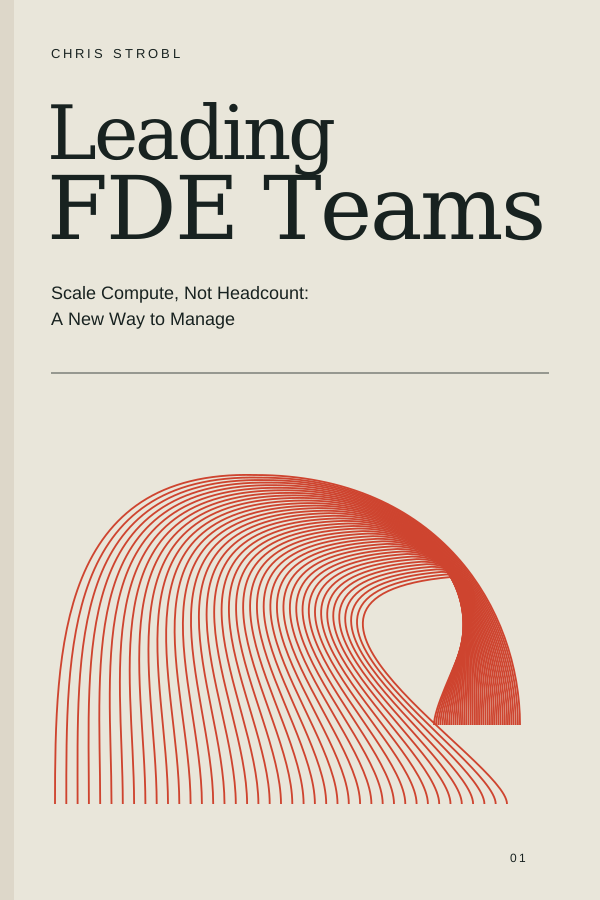
The book · By Chris Strobl
Scale Compute, Not Headcount: A New Way to Manage
AI changes what your team can deliver. Leadership determines whether the business can use it.
144 A5 pages with 17 practical visuals, including diagrams, charts and worksheets.
An FDE team works close to the problem. Its engineers can learn directly from the customer, make decisions and put useful software into people's hands.
Leading that team means building the conditions around it: hiring people with judgment, finding projects with business partners who will act, providing useful infrastructure, scaling productive compute and giving great people a future they want to share.
Leading FDE Teams is the book I'm writing about those decisions. It connects the human side of the work with the choices an organization has to make when small teams can do more.
Inside the book
Look for judgment, a record of getting useful work done, and curiosity about the business. Have a real conversation about the decisions someone has made. Give capable people meaningful work, autonomy, development and fair pay.
Understand what the business is trying to achieve and choose projects with partners who are ready to act. Earn trust by asking useful questions, explaining tradeoffs and taking responsibility together. Examine incentives and agree who can decide, adopt the work and carry the result.
Give teams access, shared context and capabilities they can rely on. Use existing IT, security and governance; agree reuse, ownership and the compute budget. Infrastructure earns its place by making the next important piece of work easier to deliver.
Turn more compute into repeatable, useful work through systems an FDE can direct. Track accepted results in use and their total cost, including review and support. Assess business value, ROI and payback before deciding where to scale.
Build a future that makes greater responsibility worthwhile. Discuss careers, autonomy, pay and participation in success honestly. Use success to give other people money, time or expertise they can put to work.
The book begins with situations people can recognize: a promising hire, a business request that needs a better conversation, or software that is technically ready before the organization is ready to use it.
The aim is to make the important choices easier to see. What evidence matters? Who needs to be involved? Which promise can the team responsibly make? What would give a capable person a good reason to stay?
Use the ideas with your team, challenge them against your experience and adapt them to the work in front of you.
I have benefited from people who were generous with what they knew. This book is a way to pass on what I have learned from building and leading teams.
I want the writing to be useful on its own: something you can discuss with a colleague, bring into a hiring conversation, or use to make a difficult decision more clearly.
Chris